Headcanon Wins: Why Fan-Built Endings Are Beating Official Anime Lore at Its Own Game
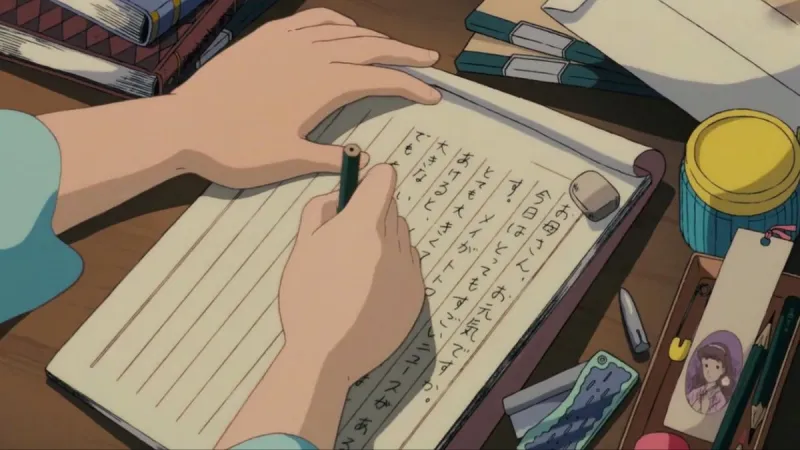
Photo: anime fan writing notes surrounded by manga and fan art at desk, via i.pinimg.com
Let's set the scene. A long-running anime wraps up. The fandom has been theorizing for months — maybe years. The finale airs, the credits roll, and within approximately forty-five minutes, half the internet has decided the ending was wrong.
Not disappointing. Not flawed. Wrong. As in: the creator made an error, and the fans have already drafted the correction.
This used to be a niche reaction. Now it's basically a genre.
The Canon Isn't What It Used to Be
For most of anime's history in the US, canon was sacred. The creator's vision was the vision, full stop. You might not love how things ended, but you accepted it the way you accepted a movie's final scene — as the definitive version of the story. Fan fiction existed in its own clearly labeled corner, understood by everyone to be an affectionate side street rather than a competing highway.
Something has shifted, and it's shifted fast. The line between official canon and fan interpretation has become genuinely blurry — not just in how fans talk about stories, but in how seriously they take their own readings of them. A compelling fan theory posted to a popular subreddit can accumulate more emotional investment than the actual ending it contradicts. Alternate timeline videos on YouTube rack up millions of views. Discord servers dedicated to specific ships operate with the energy of collaborative writing rooms.
The official ending hasn't disappeared. It's just lost its monopoly on meaning.
What's Actually Driving This
The easy explanation is that some endings are just bad. And sure — there have been some genuinely rough finales in recent years. Rushed conclusions, dropped threads, resolutions that felt like they were written by someone who had stopped caring about the characters. When a story earns your love over hundreds of episodes and then fumbles the landing, the impulse to fix it makes complete emotional sense.
But that explanation doesn't fully account for what's happening. Fans are rewriting endings that were actually pretty good. They're building alternate timelines for stories that resolved cleanly and satisfyingly. The drive isn't purely corrective — it's something else.
Part of it is the participatory nature of how Gen Z consumes media. This is a generation that grew up with comment sections, reaction culture, and platforms that actively reward engagement over passive consumption. Watching something and having opinions about it isn't enough anymore. The expectation — built into the infrastructure of how content is shared and discussed — is that you contribute. You add something. You make the conversation richer by putting your own interpretation into it.
Anime, with its deep lore, its unresolved ships, and its sprawling cast dynamics, is practically designed for that kind of engagement.
The Satisfaction Gap
There's a more psychological angle worth sitting with here. Fan theories tend to be more emotionally satisfying than official endings for a fairly simple reason: they're written for the people who care the most.
Official endings have to serve a broad audience. They have to balance commercial considerations, wrap up multiple storylines, and often satisfy editors, studios, or publishers who have their own priorities. Fan theories have none of those constraints. They're written by someone who has thought deeply about what these characters deserve, what the themes of the story demand, and what the most devoted readers actually wanted to feel.
The result is a kind of narrative precision that official media rarely achieves. Fan-written conclusions often hit harder because they're essentially optimized for emotional resonance — crafted by people who know exactly which buttons to push because those same buttons are wired into them.
Control, Uncertainty, and the Need for Better Stories
It would be too neat to say this is all just about narrative preferences. There's something broader going on culturally. American Gen Z is living through a period of sustained uncertainty — economically, politically, environmentally. The future feels genuinely hard to predict, and the structures that were supposed to provide stability (institutions, career paths, social contracts) keep proving themselves unreliable.
Stories are one of the few places where you can impose order on chaos. Where you can say: this is how things should end. This is what these people deserved. And fan theorizing takes that one step further — it says that if the official version doesn't deliver the closure you need, you have both the right and the tools to build it yourself.
That's not delusion. That's actually a pretty healthy creative response to powerlessness.
Where This Gets Complicated
The canon wars do come with some real tensions worth naming. Creator relationships with fandom have gotten genuinely messy in the era of constant online discourse. Some creators have pulled back from social media entirely after watching fans declare their work invalid. There's a version of fan entitlement that tips over from creative engagement into something more corrosive — the insistence that the story belongs to the audience rather than the person who made it.
And there's a certain irony in a community that celebrates anime's emotional depth sometimes treating creators' intentional choices as glitches to be patched.
The healthiest version of the canon wars looks like this: fans building rich, imaginative alternate readings while still holding genuine respect for the original work — treating headcanon as an addition rather than a replacement, a conversation rather than a verdict.
Because here's the thing. The best fan theories don't exist despite the source material. They exist because of it. The more a story makes you care, the more you want to keep living inside it — and sometimes that means writing your own next chapter.
That's not a rejection of the canon. That's maybe the highest compliment a fan can pay.