The Bad Guy Glow-Up: Why Anime's Morally Gray Antagonists Are Stealing Gen Z's Hearts
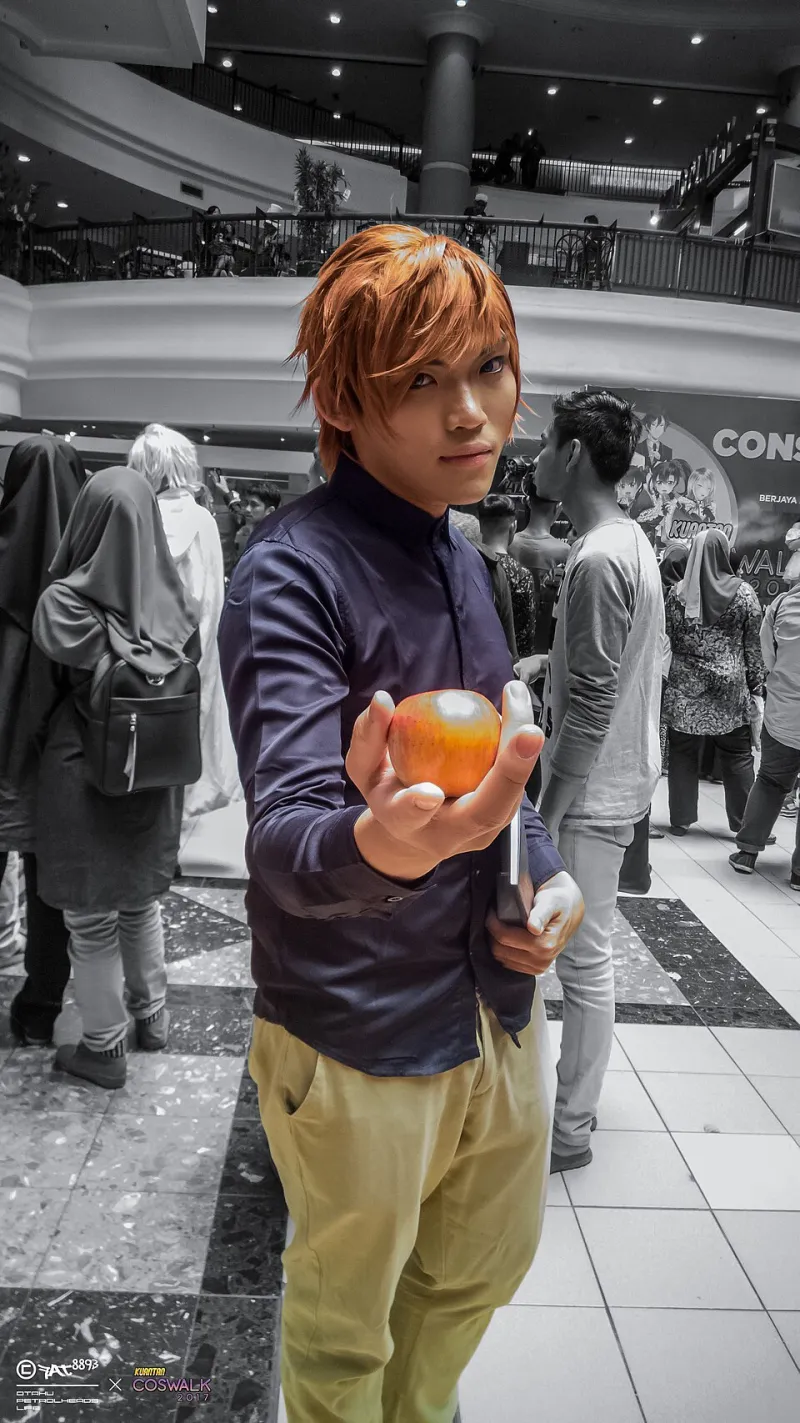
Photo: Farhan Ahmad Tajuddin, CC BY 2.0, via Wikimedia Commons
Let's be honest for a second. When was the last time you saw someone post a passionate Twitter thread defending the main hero of a shonen anime? Compare that to the absolute wall of fan art, cosplay, and deep-dive Reddit essays dedicated to the villains. Something's going on here, and it's not just a contrarian phase.
Across fandoms for Jujutsu Kaisen, My Hero Academia, and Demon Slayer, a clear pattern has emerged: the antagonists are eating. Not just in terms of screen time or animation budget — though yes, obviously that too — but in terms of genuine emotional investment from American audiences, particularly Gen Z viewers who are increasingly done with stories that hand them simple answers.
The Hero Formula Is Showing Its Age
Traditional shonen storytelling has always leaned on a pretty reliable blueprint. Underdog protagonist discovers power, trains hard, fights increasingly dangerous enemies, wins through grit and friendship. It's a formula that built entire generations of fandom, and there's nothing inherently wrong with it.
But Gen Z didn't grow up in a simple world. They came of age during economic instability, a pandemic, political polarization, and a social media landscape that makes every moral question feel simultaneously urgent and impossibly complicated. When a story hands them a protagonist whose worldview is basically "friendship and hard work solve everything," it can feel... thin.
Villains, on the other hand, tend to carry the weight of actual ideological conflict. They've usually been through something. Their worldview didn't form in a vacuum — it was shaped by failure, betrayal, or a system that genuinely let them down. That's a story Gen Z recognizes.
Shigaraki and the Radicalization Arc Nobody Asked For But Everyone Needed
Tomura Shigaraki from My Hero Academia is one of the clearest examples of this dynamic playing out in real time. On the surface, he's a chaos-obsessed villain who wants to tear down hero society. But the further the series digs into his history — a childhood of neglect, a society that framed heroism as something you either had or didn't — the harder it becomes to dismiss him as simply evil.
Fan communities in the US latched onto Shigaraki's arc hard. Not because they endorse destruction, but because his critique of hero society hits differently when you're a young American who's watched institutions fail people repeatedly. The idea that the systems built to protect people might actually be protecting something else? That's not a fantasy concept. That's Tuesday.
The fan fiction and fan art around Shigaraki reflect this. A huge portion of it isn't about making him "good" — it's about sitting with the complexity. Exploring what a different childhood might have produced. Asking what heroism even means when the heroes are flawed too.
Sukuna Doesn't Care, and That's Kind of the Point
Ryomen Sukuna from Jujutsu Kaisen operates differently. He's not tragic in the traditional sense — he's ancient, powerful, and operates entirely outside human moral frameworks. He doesn't want redemption. He's not misunderstood. He genuinely just does not care about your feelings.
And yet his fan following is enormous.
Part of this is pure aesthetic — Sukuna's design and voice work (shoutout to both the Japanese and English casts) are legitimately incredible. But there's something deeper at play. In a media landscape saturated with characters performing vulnerability and seeking validation, Sukuna's complete indifference to approval reads as almost refreshing. He's not trying to win you over. He doesn't need to.
For a generation that grew up being told to perform wellness and optimize their personal brand, a character who simply is what he is — consequences be damned — carries a weird kind of freedom. Gen Z isn't cosplaying Sukuna because they want to be cruel. They're drawn to the idea of existing without apology.
Demon Slayer's Akaza and the Grief Underneath the Violence
Demon Slayer took a different approach with its antagonist Akaza — giving him a flashback so emotionally devastating that it temporarily broke the internet. Fans who had watched him brutalize Rengoku suddenly found themselves crying over his human past, his lost love, his twisted sense of honor.
That tonal whiplash was deliberate, and it worked. Akaza's arc doesn't excuse his actions, but it refuses to let you be comfortable hating him either. That discomfort is the whole point.
American audiences responded to this with exactly the kind of nuanced engagement the creators were probably hoping for. Fan communities didn't split into "Akaza bad" and "Akaza good" camps — they mostly just sat in the messy middle, processing what it means to mourn someone who caused harm. That's genuinely sophisticated emotional territory for a mainstream action anime to occupy.
Fan Communities as Co-Authors
What makes this villain phenomenon especially interesting is how active fan communities are in extending and reshaping these characters. Through platforms like Tumblr, AO3, TikTok, and Twitter/X, American fans aren't just consuming these antagonist arcs — they're rewriting them.
Alternate universe fan fiction that gives villains different childhoods. Analytical video essays that frame Shigaraki as a product of systemic failure. Cosplay that humanizes characters the source material keeps at arm's length. This is participatory storytelling at scale, and it fundamentally changes the relationship between the audience and the text.
In a lot of ways, the villain-to-hero pipeline isn't just happening in the anime. It's happening around it, in the spaces where fans process, debate, and reimagine what they've watched. Gen Z isn't passively receiving these stories — they're actively negotiating them.
What This Actually Says About Gen Z
The deeper you look at this trend, the less it has to do with rooting for evil and the more it has to do with demanding honest storytelling. Gen Z grew up with access to more narrative complexity than any previous generation — prestige TV antiheroes, morally ambiguous video game protagonists, literary fiction in their school curricula. They've been trained to expect nuance.
When anime delivers it — when it gives them a villain with a real worldview, a real wound, a real logic — they respond with the kind of passionate investment that turns a show into a cultural moment. The characters they connect with most aren't necessarily the ones doing the right things. They're the ones asking the right questions.
Maybe that's the real pipeline here. Not villain to hero, but simple to complex. And anime, at its best, has always been willing to make that trip.